
I've moved my blog to WP: idefiningi.wordpress.com
Showing posts with label literature. Show all posts
Showing posts with label literature. Show all posts
November 10, 2015
jest (n.,v.) Reflections on page 223 (+ beyond) of DFW's Infinite Jest
Sometimes when there’s so much going on after a big move, all you want to do is be productive - whether by sending resumes or looking at apartments or by taking advantage of having the time to wander around and learn the new place you’re by getting outside and taking it all in.
And sometimes, you just have to curl up with yourself and do exactly what makes time disappear for you, which for me tonight was this (you can also read it on Medium if you prefer):
And sometimes, you just have to curl up with yourself and do exactly what makes time disappear for you, which for me tonight was this (you can also read it on Medium if you prefer):
Some Thoughts on the Dynamics of Chronology & Storytelling in David Foster Wallace’s Infinite Jest
According to many reading guides for David Foster Wallace’s Infinite Jest, page 223 is one you have to get to; suck it up through the confusion that is the book’s first 222 pages. The guides also tell readers, once there, to bookmark that page as they’ll constantly need to come back to it. At first, that page gave me hope when the book seemed too much to take in and get through. I trembled as I flipped page by page in the 200’s with anticipation. However, once I got there, I was underwhelmed. I realized that maybe they had played a trick on me.
[spoiler alert]
Those who have read Infinite Jest (or as least past page 223!) may agree. The page is to act as an aid to readers by listing the chronology of otherwise unnumbered years to help them piece together the narrative’s events in a more linear fashion. If we know when the events unfold, we can make better connections and better understand correlations and cause and effect that gives reason to the story. Presumably.
But maybe the years don’t matter; maybe a chronology of that kind, formalized and “historized” actually doesn’t matter as much as we think or as much as it should. Which is the point and perhaps why I was so underwhelmed by page 223 and it’s “intel.” Sure there are politics and “milestones” that touch characters’ lives — the same as those that touch our own here — yet, at the end of the day, the longest chapters, the most colourful — at least to me — were those internal dialogues describing more of our banal moments in life (Erdedy, for one). In some ways it didn’t matter when these moments were occurring; committing them to memory is what gave them their weight, as they informed my understanding of each character and DWF’s overall messages about progress, consequence, anticipation, ambition , passing time, and ultimately, the human drive to find “happiness” — or rather, meaning and belief.
Whatever we see fitting to be spotlighted in the central story we tell ourselves is what makes up our lives because it drives how we live. We can look back to the time we waited for something for what seemed like eternity but forget that it also happened many times before and nothing great came of it (Erdedy); we may remember the wrong phone conversations and recall inconsequential ones (Hal and Orin); we may never forget how sick we got all those times, cold-sweat and shuddering on the bathroom floor — except the time that it nearly kills us (Joelle). Those everyday struggles and banalities, the points in our lives that we orient our understanding of ourselves around are what make up our lives, perhaps even who we think we are. Even if there are larger uncontrollable events and circumstances primarily driving our lives forward, what matters is what I’ll call our holydays.
holy (adj.) Old English halig “holy, sacred; godly,” from Proto-Germanic from *kailo- “whole, uninjured.” Primary (pre-Christian) meaning is not possible to determine, but probably it was “that must be preserved whole or intact, that cannot be transgressed or violated,” and connected with Old English hal (see health) “wholeness, a being whole, sound or well,” and Old High German heil “good luck.”
However big or small — whatever are the before Then’s and the after That’s (the “before J. Incandenza’s suicide” or “that night before Interdependence Day”) — these are symbolic days in our minds. Though most obviously our experience of them is linear, what meaning we draw from them can be somewhat arbitrary. Events tend to “reveal” themselves later to us and change in their relative importance as time moves on, and when they occurred becomes less important than the fact that they did. In an effort to weave together a story of our lives that has some semblance of meaning and holiness, we alter and skew, whether consciously or not, our belief or understanding of what really happened. It helps provide us with more more weight as we float so that we may better anchor ourselves — so that we may find some kind of buoyancy in the havoc that is otherwise likely more of an existentialist void, an infinite/simal phenomenon or some metaphysical accident than objectively “a chronicle” or “history” at all. Our “life story” is no happy accident though. It’s a work of art!
luck (n.) late 15c. from early Middle Dutch luc, shortening of gheluc “happiness, good fortune,” of unknown origin [go figure!]
Without those relatively inane, though wholly personal holydays, we cannot find a way to establish our identity, to bookmark our tiny selves into the massive life continuum with whose limits and edges we know little of.Without them we are nothing, unidentified and unidentifiable, with no story, arc, nor denouements, No Amens or Hell Nos; no Holy Cows to accompany the moments that fill the empty hole that otherwise could be any life in this dumbfounding world.
continuum (n.) 1640s, from Latin continuum “a continuous thing,” meaning a continuous sequence in which adjacent elements are not perceptibly different from each other, but the extremes are quite distinct.We need reference points in our experience of the world and what better place to start than with the personal. Many moments the story of a single character or two sweeps the reader into forgetting about some of the dystopian details in the book. However, every time, just as I started getting used to a character, the fractal chronology of the novel took me to a new place, a new time, a new story. DFW forays into the personal amidst a highly complex setting to “authorially” remind that it’s the personal stories and our own ability to relate that help us understand the world — any world imagined by the author, be it Wallace or you.

Ultimately though, absolute clarity can never be achieved — and perhaps only slowly refined if we actually live out the story ourselves and build out the pieces that are missing on our own.
The stories we tell ourself makes each of our lives feel more sacred and unique. This “life storytelling” that moves us through this world marks some of our experiences holy, often obscured, and others and more often, forever lost in the corners of our life. And just like that, as we get caught up in our own holy days, we eject ourselves from the larger picture — akin to when when we pick up a book and get lost in its story, we forget our own.
Thus, it would be reasonable to hypothesize that:
1) Any moment spent reading is not really valuable nor holy until we make it applicable in real life. If we can take what we read, however fictitious, and apply it to our own life as metaphor, fodder for cliches or descriptive inspirations, we may better devise ways to sanctify the moments that happen to us. This can help us find more meaning as we run the chapters of our lives from Capital to period. from life to death, and all the calendar years in between.
2) We should be able to extrapolate our “life story” and its sanctity and meaning more universally and/or objectively. Otherwise we’ll be narcissists, self-possessed theatrical drama queens, perhaps even laughing stocks. Which brings me to:
jest (n.) from Latin gesta ‘actions, exploits’, from gerere ‘do’. The original sense was ‘heroic deed’, hence ‘a narrative of such deeds’; later the term denoted an idle tale, hence a joke.
 |
| sorry for the #longread |
p.s. I’m only halfway through the book.
p.p.s. I also realized that (and only Infinite Jest readers will get this), November 8th was #InterdependenceDay - and also the day I landed in London. Symbolic much?


June 24, 2015
wake (n., v.) Reading David Foster Wallace's Infinite Jest
Excuse the lack of punctuation etc in this entry as I am curentlz typing ona tinz foreign keyboard, where the punctuation marks are hidden in super/subscript, require multi-digit ctr-alt-function-whatever motions and manz kezs have been swapped (mhm),semicolon,, I have little patience (at the cost of you, my limited audience, I know) - but if i were to stop and correct, i would do so at the expense of slowing down an insurgence of thoughts that come in the wake of my experience with a combination of things ill share with you below.
I had another lucid dream a few nights ago, likelz brought on bz jetlag, mz waking at 4am, reading Infinite Jest for an hour or two before falling into a buzzed numbing of sleep where i continue being awake. it was a failed attempt at a luciditz with full control, but i retained enough awareness of the fact that it was a dream to struggle in it and not be able to give in to the story unravelling, couldnt fall into the trance and rest my mind with body. instead, i lay awake watchful.
Waking from such dreams, where i have not reallz been entirelz ,asleep, is a strange feeling. I recall these dreams as real happenings, zet they bear no ,real, consequence on my life, albeit the emotions thez carrz on through to me in mz fullz wakeful state.its tiring being awake.
I had another lucid dream a few nights ago, likelz brought on bz jetlag, mz waking at 4am, reading Infinite Jest for an hour or two before falling into a buzzed numbing of sleep where i continue being awake. it was a failed attempt at a luciditz with full control, but i retained enough awareness of the fact that it was a dream to struggle in it and not be able to give in to the story unravelling, couldnt fall into the trance and rest my mind with body. instead, i lay awake watchful.
Waking from such dreams, where i have not reallz been entirelz ,asleep, is a strange feeling. I recall these dreams as real happenings, zet they bear no ,real, consequence on my life, albeit the emotions thez carrz on through to me in mz fullz wakeful state.
wake (v.) "to become awake," a Middle English merger of Old English wacan "to become awake, arise, be born, originate," and Old English wacian "to be or remain awake," (Gothic wakan "to watch", from root *weg- "to be strong, be lively" (cognates: Sanskrit vajayati "drives on;" Latin vigil "watchful, awake," vigere "be lively, thrive"), Middle Dutch wachten "to watch, guard;" Meaning "a sitting up at night with a corpse" is attested from early 15c.
- >Its tiring staying awake, too.
“The true opponent, the enfolding boundary, is the player himself. Always and only the self out there, on court, to be met, fought, brought to the table to hammer out terms. The competing boy on the net’s other side: he is not the foe: he is more the partner in the dance. He is the what is the word excuse or occasion for meeting the self. As you are his occasion. Tennis’s beauty’s infinite roots are self-competitive. You compete with your own limits to transcend the self in imagination and execution. Disappear inside the game: break through limits: transcend: improve: win. Which is why tennis is an essentially tragic enterprise, to improve and grow as a serious junior, with ambitions. You seek to vanquish and transcend the limited self whose limits make the game possible in the first place. It is tragic and sad and chaotic and lovely. All life is the same, as citizens of the human State: the animating limits are within, to be killed and mourned, over and over again.”
- David Foster Wallace, Infinite Jest
(or. the "endless war against the self you cannot live without.")
But we battle on I guess. the words of a dear friend, JS, brought me some consolation this morning.
The most i can do is yes, narrate it, leave words in my wake and let my enduring internal dialogue turn to script so that i can document my state as i live, wherever it is i find myself on the spectrum of sleep and wakefulness. thoughts gett lost but those that survive remind me that the onlz thing real to me is my voice, mz abilitz to attach expressions to these insurmountable ideas, anchor them in this space and in this time, and continue that effortless struggle to reason myself into motivation enough to continue, to change, grow, do, something as an alternative to a crippling confusion , tickling uncertainty, an infinite jest that without the dream would otherwise leave only room for a laughter, maddenning and unsatisfying in nature. and thats one thing i dare not relinquish: my sense of humour.In ten, twenty years or even next week we’ll look back on right now and think that what followed was inevitable. Don’t forget the uncertainty and unpredictability of today and how you are fighting for every decision, every accomplishment, and every outcome. We’re all surfing on the edge of an ever advancing reality and it’s easy to forget that even when life seems the same what comes next is always new and every minute forward must be earned, lived, and will ultimately be left in your wake for yourself and others to recall and narrate.
humour (n.) Middle English: via Old French from Latin humor ‘moisture’, from humere, humid. The original sense was ‘bodily fluid’ (surviving in aqueous humour and vitreous humour ); it was used specifically for any of the cardinal humours, wence ‘mental disposition’ was thought to be caused by their relative proportions, to determine state of mind. This led to a sense of "mood, temporary state of mind" (first recorded 1520s);p.s. im still not going to copzedit this entrz. it makes the madness - or humour - more convincing. You decide.
January 8, 2013
joy (n.)
I recently came across a poignant excerpt from one my favourite author's new books - Zadie Smith's Joy:
"The writer Julian Barnes, considering mourning, once said, “It hurts just as much as it is worth.” In fact, it was a friend of his who wrote the line in a letter of condolence, and Julian told it to my husband, who told it to me. For months afterward these words stuck with both of us, so clear and so brutal. It hurts just as much as it is worth. What an arrangement. Why would anyone accept such a crazy deal? Surely if we were sane and reasonable we would every time choose a pleasure over a joy, as animals themselves sensibly do. The end of a pleasure brings no great harm to anyone, after all, and can always be replaced with another of more or less equal worth."
What an arrangement that is - both in literary as well as phenomenological terms. We often speak of "happiness" being a means to an end - but I wonder, what sort of happy we are searching for - one of joy or one of pleasure? (Deepak Chopra said "Happiness is divine discontent" after all...)
So, which pursuit actually yields more joy, happiness, contentment.. (call it what you will, as with Shakespeare's name-shifting flower)?
Should we fear joy in our pursuit ofhappiness life as it'll inevitably be lost?

On every side of joy is its negation, our loss of it. Yet we seek out the bright side and are often tempted to never turn the coin until it turns on us.
"Joy is such a human madness," said Zadie Smith. And what's wrong with that? Aren't the mad always laughing anyway?
"The writer Julian Barnes, considering mourning, once said, “It hurts just as much as it is worth.” In fact, it was a friend of his who wrote the line in a letter of condolence, and Julian told it to my husband, who told it to me. For months afterward these words stuck with both of us, so clear and so brutal. It hurts just as much as it is worth. What an arrangement. Why would anyone accept such a crazy deal? Surely if we were sane and reasonable we would every time choose a pleasure over a joy, as animals themselves sensibly do. The end of a pleasure brings no great harm to anyone, after all, and can always be replaced with another of more or less equal worth."
What an arrangement that is - both in literary as well as phenomenological terms. We often speak of "happiness" being a means to an end - but I wonder, what sort of happy we are searching for - one of joy or one of pleasure? (Deepak Chopra said "Happiness is divine discontent" after all...)
So, which pursuit actually yields more joy, happiness, contentment.. (call it what you will, as with Shakespeare's name-shifting flower)?
Should we fear joy in our pursuit of
 |
On every side of joy is its negation, our loss of it. Yet we seek out the bright side and are often tempted to never turn the coin until it turns on us.
"Joy is such a human madness," said Zadie Smith. And what's wrong with that? Aren't the mad always laughing anyway?
September 17, 2012
exhaust (v.) The Alchemist review
What I thought would be a book akin to Herman Hesse's Journey to the East, turned out to be more like William Styron's Darkness Visible. Styron's as well as Coelho's books, while significant in some ways and worth the time to read, somehow lacked the same kind of pivotal something that would help convey a deeper, more "stunning" message. I wasn't moved at the core - just at a cerebral level.
I was interested, but the work wasn't interesting.
The Alchemist was not poetry, nor was it song. It read clearly, candidly, and...banally - without leaving much of any kind of taste in my mouth, (what I think is much too close to a complete literary failure). The book set itself up as something portraying mystery, inviting curiosity and interpretation; instead, it provided a simplicity in its answers that made the work too plain and 'logical'. It may be a matter of my personal taste, but this exhausted me. Somehow working harder, energizes me as a reader.
I would have rather been pulled into a less comprehensible, more open-ended web of storytelling; instead, the author did not trust the reader to make any misguided judgments, draw any deeper conclusions, or be left to deliberate anything. Everything was there, as it was, at the end, and it did not encourage me to think further. Substance was missing.
What I hoped would be mystical code turned out to be a simple formula - and I don't think it's because I am a lazy reader (here's proof).
So here it is, a concise version of the above - from Goodreads:
 The Alchemist by Paulo Coelho
My rating: 2 of 5 stars
The overall story was a good one, though I wasn't particularly a fan of the writing style. The simplicity of sentences would have worked if the concepts embedded in them had not been so "densely" presented throughout. It was hard to keep track of powerful passages, as seemingly inane ones seemed somehow elevated (stylistically) to the level of much more profound ones. Not sure if that makes sense...
The seemingly central notion of alchemy still escaped me a bit as well, as the story lacked the magical flavours such a practice invites. I felt a bit disappointed that the work had not been more exhaustive. Perhaps this is because I have not given the idea of a man's pursuit for gold careful enough deliberation to arrive at a satisfactory conclusion for myself. The overall theme somehow was reduced to 'one man's treasure is another man's gold' which did not bode well with me....
I invite you to share your thoughts below. I hope I am wrong....
September 4, 2012
design (n.)
I've spent some time navigating design files, designing logos and creating marketing materials for my job. Daily, however, I'm also exposed to design in a different way - a more holistic approach to design perhaps - the design that informs and guides our behaviour.
 I've long been thinking about this sort of thing. For months I've observed my own reactions to various asanas in yoga class, which are very much a result of how I'm feeling about other things rather than the postures themselves. Every class, the teacher tells us to breathe through these "difficult" moments, these places of tension, rather than around them.
I've indulged in the convenient thinking that it's important to face challenges like difficult yoga poses dead on without being distracted by what else is going outside them. On certain days, I'll sweat through the difficulty without really observing what my breath is really all about, how it guides my thoughts about my movements and reactions, and how the challenge itself is really something I perceive as difficult rather than something that actually is physically challenging. It's often more of a mental block than a physical one.
This all leads me to a general inspiration I've had lately, to look for the design behind the seemingly obvious, immediate, and simple. With a dose of compassion and a willingness to see more than what just appears in front of us, I think we can really better our lives and ourselves - and hence, those around us. If I'm finding a certain pose challenging, that I generally think should be easy, it may be a result of something else - extra stress I'm dealing with, a lack of sleep or food, my mind wandering off elsewhere because something is keeping me from focusing on the pose.... once I become aware of these things, expectations seem to fall away and the challenge becomes easier to face and breathe through.
There is a design around us, embedded deep, and the more we observe it and try to understand it, the better we'll be able to live with difficult factors and variables. In fact, I think that every challenge is an opportunity to test yourself, as it is a reminder that the design is there - that by listening to it, you'll strive for unity with it - and so even the ugliest and most difficult things in life will align with your rhythm and you'll better embrace them.
(Can you tell I've been reading The Alchemist - which has completely validated a lot of my "listen to the universe" philosophies.)
 I've long been thinking about this sort of thing. For months I've observed my own reactions to various asanas in yoga class, which are very much a result of how I'm feeling about other things rather than the postures themselves. Every class, the teacher tells us to breathe through these "difficult" moments, these places of tension, rather than around them.
I've indulged in the convenient thinking that it's important to face challenges like difficult yoga poses dead on without being distracted by what else is going outside them. On certain days, I'll sweat through the difficulty without really observing what my breath is really all about, how it guides my thoughts about my movements and reactions, and how the challenge itself is really something I perceive as difficult rather than something that actually is physically challenging. It's often more of a mental block than a physical one.
This all leads me to a general inspiration I've had lately, to look for the design behind the seemingly obvious, immediate, and simple. With a dose of compassion and a willingness to see more than what just appears in front of us, I think we can really better our lives and ourselves - and hence, those around us. If I'm finding a certain pose challenging, that I generally think should be easy, it may be a result of something else - extra stress I'm dealing with, a lack of sleep or food, my mind wandering off elsewhere because something is keeping me from focusing on the pose.... once I become aware of these things, expectations seem to fall away and the challenge becomes easier to face and breathe through.
There is a design around us, embedded deep, and the more we observe it and try to understand it, the better we'll be able to live with difficult factors and variables. In fact, I think that every challenge is an opportunity to test yourself, as it is a reminder that the design is there - that by listening to it, you'll strive for unity with it - and so even the ugliest and most difficult things in life will align with your rhythm and you'll better embrace them.
(Can you tell I've been reading The Alchemist - which has completely validated a lot of my "listen to the universe" philosophies.)
March 13, 2011
prejudice (n.)
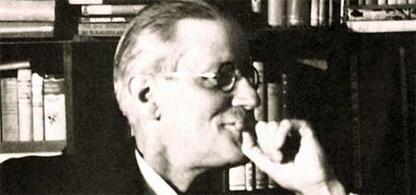 |
| I drink, I fall down, no problem.” ~James Joyce |
In light of some recent conversations, (either mildly inebriated or dead sober in History of Publishing class), I got to talking about Jane Austen.
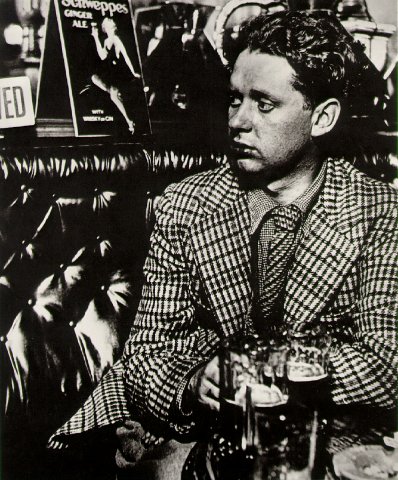 |
| "An alcoholic is someone you don't like who drinks as much as you do." ~Dylan Thomas |
Over the weekend, I had a chat with some friends of mine and we somehow started talking about literature (we were probably drinking scotch). Our conversation also culminated with Jane Austen by way of Joyce and Conrad.
 |
| "What's so unpleasant about being drunk? You ask a glass of water" ~Douglas Adams |
I say, there's so many books out there to sift though that it is a skill in itself to discover unconventional, "non-English curriculum" authors like Graham Swift, Haruki Murakami, Richardson Davies, Ivo Andric, and Will Self - at the expense of Jane Austen - and all of whom I would have never discovered had I stuck to "Top 100 Novels of All Time" lists.
 |
| "Beer, of course, is actually a depressant. But poor people will never stop hoping otherwise." ~Kurt Vonnegut |
I call it being proud in my prejudice.
There's too much to experience to not pass judgment.
 |
| Drink and dance and laugh and lie, Love, the reeling midnight through, For tomorrow we shall die! (But, alas, we never do.)" ~Dorothy Parker |
"Good books, like good friends, are few and chosen; the more select, the more enjoyable."
~ Louisa May Alcott
January 31, 2011
reason (n.) Kafka on the Shore review
I had a lovely Saturday this past weekend - finished off some work for school around 6pm and then decided to finish off the Murakami novel I've been reading... I lay into my super comfy couch and read for about half an hour and then was lulled to sleep with The Deep Dark Woods playing in the background. I can't remember the last time I napped so deeply - and man, did I enjoy it. Didn't even wake up groggy...
 Forty minutes later, I got up, fixed myself a huggggee coffee and excavated through the last twenty pages of Kafka on the Shore. It was fantastic(al). I had about an hour and a half before I was heading out for a friend's birthday so I did my best to make sense of a novel that according to its author,
"...contains several riddles, but there aren't any solutions provided. Instead several of these riddles combine, and through their interaction the possibility of a solution takes shape. And the form this solution takes will be different for each reader. To put it another way, the riddles function as part of the solution. It's hard to explain, but that's the kind of novel I set out to write."
(I won't keep quoting the genius man though - there's way too many blogs out there that keep referring to a certain interview with Haruki Murakami.)
So, great. I was left with questions that somehow amalgamate into a set of riddles - riddles that aren't even really clear, let alone their solutions. So, after turning the last page, Murakami planned to still require me to continue suspending my beliefs so that I could draw up a "reasoned" (or rather, "reasonable") solution.
You'd think that after 460 pages of suspending belief and growing accustomed to incestual relationships, fish raining from the sky, speaking cats, spirits roaming through forests and lots and lots of blood (sucked dry from wrists and gushing from feline intestines, you know, so you get the general idea) - you'd think after all that, coming up with a reasonable (i.e. insane) solution would be easy.
My first inclination was to be lazy and find someone else's answers and appropriate them to my own understanding of the book; however, what I found was an array of forums full of questions (like my own), reviews of a "dreamlike", "mindbending","tour de force", and a really snazzy author site - (which a lot of Flashdoesn't detract from, but rather, enhances the experience...)
So, in short, I found no answers out there so I had to figure it out for myself.
Stop reading now if you haven't read Kafka on the Shore - because you may think I've lost my mind. Instead, scroll down for some LOLcats.


Otherwise... Here's my take:
There's undoubtedly questions set up by the plot - the biggest one being, what constitutes a character, which extends to, who is who really? Understanding the duality of the characters helps justify their actions.
Simply, drawing from Shintoism I presume, is that a character is made up of the body and the spirit - read through the lenses of literal "bodily" conventions versus the metaphorical "spiritual" conceptualizations.
I gather that the entrance stone, when opened, allows spirits to move between bodies - and when closed, "logically", does not permit this movement... this is why a couple of characters (Nakata and Miss Seiki) die when the entrance stone is closed. I presume this is because they are not "complete" - Nakata's spirit moves into Hoshino because he is too weak/sleeping to close the stone, and Miss Seiki's spirit is in the spirit world, and so her body must die. You must have both aspects of "your"self in the literal/bodily world when the stone is closed because the spirits can no longer enter the living/bodily world (outside the forest) to fill the empty bodies...(?)
In general, it's confusing as to who is who when certain actions take place. In the literal world (of the reader and the logic set up external to the novel), the body trumps the spirit. This is why we initially feel uncomfortable dealing with events that take place that break down our expectations (like for example, Kafka sleeping with his mother and sister).
When Kafka sleeps with Miss Saeki, it is Kafka sleeping with his mother - but only as interpreted by "literal" or "bodily"- otherwise his body is just reuniting with the spirit of his mother. So, since the novel is working on several levels - the literal and the dreamlike spirit level - our literal, reading-selves feel very uncomfortable while our imaginative selves can interpret this differently: Kafka Tamura wants bodily attachment to his real mother, and the spirit inside him (the boy on the shore) is morally justified in partaking in the sexual act (with 15 year old Miss Seiki) and Kafka Tamura is jutified in reuniting with his mother on a spiritual level.
I digress. I can't handle explaining this in full sentences. So...
A confusing chronology (by me):
1. Hillside scene - kids fall unconscious. Nakata (body and mind) loses all his memory - Miss Saeki (body and mind) has opened the entrance stone to reunite with her lover - Kafka (the boy she saw on the shore).
2. Miss Seiki loses her spirit and becomes a hollow person in this world, working at the library with Oshima.
3. The body of Kafka Tamura leaves his home in search of his own spirit - which he finds at the library in Takmatsura (in the room with 15year old Miss Saeki; in effect, the spirit of Kafka Tamura is really the living spirit of Miss Seiki's lover, whose body was killed in university).
3.a. At this point, the real spirit of Kafka Tamura leaves his body and goes into Nakata. This is why Nakata and Kafka Tamura are both drawn toward each other, on parallel paths that eventually converge - on a spirital level - when the entrance stone is closed and things are "set straight".
4. Miss Saeki's spirit remains as a 15 year old girl (and appears in the room, where the body of Kafka Tamura sleeps with her - in his "dream" world).
4a. As such, Kafka Tamua's spirit has left his body (and gone into Nakata's body) and has been replaced by the Kafka on the shore's spirit - so he sleeps with what his body thinks is his mother.
5. Kafka Tamura's father's spirit takes shape as a concept - Johnnie Walker (his father is empty, mean, a hollow body, which is why they don't get along).
5a. Nakata (Kafka T's spirit) murders the Johnnie Walker (the spirit of Kafka T's father).
5b. Kafka Tamura reclaims his living spirit in the world, retains memories and escapes spirit forest before closing of the entrance stone.
6. Nakata is seeking to close the entrance stone in order to free the spirit of Kafka Tamura inside him - at the expense of Miss Saeki's bodily life, as her spirit will have to remain forever in the spirit world, making her body die. (When the entrance stone is closed, no longer can your body live without a spirit)
6a. As such, Nakata's body dies since his spirit is Kafka Tamura's spirit - which returns to Kafka Tamura when his bodily self overcomes the spirit inside him -Kafka on the shore- so his body returns to the bodily world, leaving the 15yr old Miss Saeki in the forest and acting as a transporter of Kafka on the shore's spirit (back to the spirit world). His body leaves to reclaim his own spirit (from Nakata).
7. Nakata's spirit goes into Hoshino (speaks to cats) and uses Hoshino's body to close the entrance stone. (Note: Nakata's spirit leaves him when he is "weak" and sleeps for long periods of time to become the concept, Colonel Sanders who guides Hoshino to complete the closing of the entrance stone mission).
I hope that made sense. Let's try and simplify it again:
When the entrance stone is opened:
spirit body
Kafka Tamura ----> Nakata and back to Kafka
Nakata ---> Coloner Sanders/Hoshino
Kafka on shore (lover)---> Kafka Tamura/ left in spirit world
Miss Saeki ---> 15 year old self in spirit world
(returns for a while, sleeps w.Kafka and then returns to the spirit world to tell Kafka to go back, reclaim his spirit and remember her forever.)
When the entrance stone is closed:
Miss Seiki and her lover are together in the spirit world (both bodies dead)
Nakata is dead and remembered forever by Hoshino (his spirit survives in him?)
Kafka has reunited his spirit with his body.
Lastly, Oshima and Sakura.... I gather neither is Kafka's truly sister - it would be too obvious. I actually believe that Kafka doesn't sleep with his real sister - which is a way to show that he was not necessarily led down an 'Oedipal' path, but that his projections about what 'fate' is are misguided; in fact, fate comes from the willpower of the spirits (the thing that Hoshino "kills" - the willpower of the spirits is effectively forbidden entry into the bodily world so that things can be restored (set 'straight').
Oshima is probably just a character presenting to us the possibility of duality even within the bodily aspect of ourselves to furhter break down the boundaries of our expectations and expected understandings...
Haha.. and stop. (TOtal geek out.)
[05.19.2011: I noticed this page is getting a lot of hits via searches about the book. I welcome comments and would love a discussion if it's compelling. Don't be scared, people-I-don't-know!]
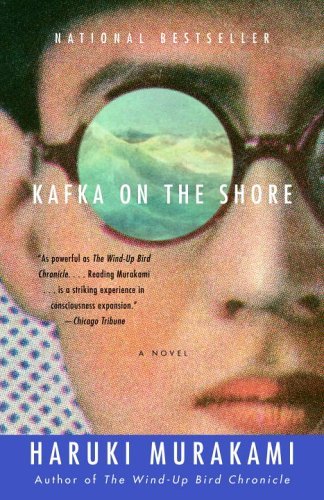
"...contains several riddles, but there aren't any solutions provided. Instead several of these riddles combine, and through their interaction the possibility of a solution takes shape. And the form this solution takes will be different for each reader. To put it another way, the riddles function as part of the solution. It's hard to explain, but that's the kind of novel I set out to write."
(I won't keep quoting the genius man though - there's way too many blogs out there that keep referring to a certain interview with Haruki Murakami.)
So, great. I was left with questions that somehow amalgamate into a set of riddles - riddles that aren't even really clear, let alone their solutions. So, after turning the last page, Murakami planned to still require me to continue suspending my beliefs so that I could draw up a "reasoned" (or rather, "reasonable") solution.
You'd think that after 460 pages of suspending belief and growing accustomed to incestual relationships, fish raining from the sky, speaking cats, spirits roaming through forests and lots and lots of blood (sucked dry from wrists and gushing from feline intestines, you know, so you get the general idea) - you'd think after all that, coming up with a reasonable (i.e. insane) solution would be easy.
My first inclination was to be lazy and find someone else's answers and appropriate them to my own understanding of the book; however, what I found was an array of forums full of questions (like my own), reviews of a "dreamlike", "mindbending","tour de force", and a really snazzy author site - (which a lot of Flashdoesn't detract from, but rather, enhances the experience...)
So, in short, I found no answers out there so I had to figure it out for myself.
Stop reading now if you haven't read Kafka on the Shore - because you may think I've lost my mind. Instead, scroll down for some LOLcats.

Otherwise... Here's my take:
There's undoubtedly questions set up by the plot - the biggest one being, what constitutes a character, which extends to, who is who really? Understanding the duality of the characters helps justify their actions.
Simply, drawing from Shintoism I presume, is that a character is made up of the body and the spirit - read through the lenses of literal "bodily" conventions versus the metaphorical "spiritual" conceptualizations.
I gather that the entrance stone, when opened, allows spirits to move between bodies - and when closed, "logically", does not permit this movement... this is why a couple of characters (Nakata and Miss Seiki) die when the entrance stone is closed. I presume this is because they are not "complete" - Nakata's spirit moves into Hoshino because he is too weak/sleeping to close the stone, and Miss Seiki's spirit is in the spirit world, and so her body must die. You must have both aspects of "your"self in the literal/bodily world when the stone is closed because the spirits can no longer enter the living/bodily world (outside the forest) to fill the empty bodies...(?)
In general, it's confusing as to who is who when certain actions take place. In the literal world (of the reader and the logic set up external to the novel), the body trumps the spirit. This is why we initially feel uncomfortable dealing with events that take place that break down our expectations (like for example, Kafka sleeping with his mother and sister).
When Kafka sleeps with Miss Saeki, it is Kafka sleeping with his mother - but only as interpreted by "literal" or "bodily"- otherwise his body is just reuniting with the spirit of his mother. So, since the novel is working on several levels - the literal and the dreamlike spirit level - our literal, reading-selves feel very uncomfortable while our imaginative selves can interpret this differently: Kafka Tamura wants bodily attachment to his real mother, and the spirit inside him (the boy on the shore) is morally justified in partaking in the sexual act (with 15 year old Miss Seiki) and Kafka Tamura is jutified in reuniting with his mother on a spiritual level.
I digress. I can't handle explaining this in full sentences. So...
A confusing chronology (by me):
1. Hillside scene - kids fall unconscious. Nakata (body and mind) loses all his memory - Miss Saeki (body and mind) has opened the entrance stone to reunite with her lover - Kafka (the boy she saw on the shore).
2. Miss Seiki loses her spirit and becomes a hollow person in this world, working at the library with Oshima.
3. The body of Kafka Tamura leaves his home in search of his own spirit - which he finds at the library in Takmatsura (in the room with 15year old Miss Saeki; in effect, the spirit of Kafka Tamura is really the living spirit of Miss Seiki's lover, whose body was killed in university).
3.a. At this point, the real spirit of Kafka Tamura leaves his body and goes into Nakata. This is why Nakata and Kafka Tamura are both drawn toward each other, on parallel paths that eventually converge - on a spirital level - when the entrance stone is closed and things are "set straight".
4. Miss Saeki's spirit remains as a 15 year old girl (and appears in the room, where the body of Kafka Tamura sleeps with her - in his "dream" world).
4a. As such, Kafka Tamua's spirit has left his body (and gone into Nakata's body) and has been replaced by the Kafka on the shore's spirit - so he sleeps with what his body thinks is his mother.
5. Kafka Tamura's father's spirit takes shape as a concept - Johnnie Walker (his father is empty, mean, a hollow body, which is why they don't get along).
5a. Nakata (Kafka T's spirit) murders the Johnnie Walker (the spirit of Kafka T's father).
5b. Kafka Tamura reclaims his living spirit in the world, retains memories and escapes spirit forest before closing of the entrance stone.
6. Nakata is seeking to close the entrance stone in order to free the spirit of Kafka Tamura inside him - at the expense of Miss Saeki's bodily life, as her spirit will have to remain forever in the spirit world, making her body die. (When the entrance stone is closed, no longer can your body live without a spirit)
6a. As such, Nakata's body dies since his spirit is Kafka Tamura's spirit - which returns to Kafka Tamura when his bodily self overcomes the spirit inside him -Kafka on the shore- so his body returns to the bodily world, leaving the 15yr old Miss Saeki in the forest and acting as a transporter of Kafka on the shore's spirit (back to the spirit world). His body leaves to reclaim his own spirit (from Nakata).
7. Nakata's spirit goes into Hoshino (speaks to cats) and uses Hoshino's body to close the entrance stone. (Note: Nakata's spirit leaves him when he is "weak" and sleeps for long periods of time to become the concept, Colonel Sanders who guides Hoshino to complete the closing of the entrance stone mission).
I hope that made sense. Let's try and simplify it again:
When the entrance stone is opened:
spirit body
Kafka Tamura ----> Nakata and back to Kafka
Nakata ---> Coloner Sanders/Hoshino
Kafka on shore (lover)---> Kafka Tamura/ left in spirit world
Miss Saeki ---> 15 year old self in spirit world
(returns for a while, sleeps w.Kafka and then returns to the spirit world to tell Kafka to go back, reclaim his spirit and remember her forever.)
When the entrance stone is closed:
Miss Seiki and her lover are together in the spirit world (both bodies dead)
Nakata is dead and remembered forever by Hoshino (his spirit survives in him?)
Kafka has reunited his spirit with his body.
Lastly, Oshima and Sakura.... I gather neither is Kafka's truly sister - it would be too obvious. I actually believe that Kafka doesn't sleep with his real sister - which is a way to show that he was not necessarily led down an 'Oedipal' path, but that his projections about what 'fate' is are misguided; in fact, fate comes from the willpower of the spirits (the thing that Hoshino "kills" - the willpower of the spirits is effectively forbidden entry into the bodily world so that things can be restored (set 'straight').
Oshima is probably just a character presenting to us the possibility of duality even within the bodily aspect of ourselves to furhter break down the boundaries of our expectations and expected understandings...
Haha.. and stop. (TOtal geek out.)
[05.19.2011: I noticed this page is getting a lot of hits via searches about the book. I welcome comments and would love a discussion if it's compelling. Don't be scared, people-I-don't-know!]
January 22, 2011
receipt (n.)
For one, I will begin with what about the word "receipt" inspired me to write earlier today.
You may be thinking that I'm talking about receipts in the spirit of Mitch Hedburg's complaint about not needing to get "ink and paper involved" because no one can really quite imagine "a scenario that I would have to prove that I bought a doughnut."
However, somewhere beyond the humour, the receipt still stands for something symbolic. It's a little snippet of your purchasing archives - which led me to think about how we spend our money in general.

The conversation came about when I was chatting with my boyfriend about the latest movie to hit the box office: Barney's Version.
You see, the brother of a friend of mine adapted the screenplay (which is kind of a big deal, yah know?). I feel that I want to somehow support it, (which in the movie biz is often by contributing to its revenue): I want to purchase a movie ticket.
However, I am presently on page 23 of Barney's Version (by Mordecai Richler).

I want to read the book first, but I fear the movie leaving theatres before I can show my $upport...
Then I had an enlightening thought (I think).
Get a receipt
and then reseat!
What I really mean is, swipe my debit card, walk away with my movie ticket for Barney's Version, and then relocate my bum to a different film playing at the same show time (I mean, I gotta get something from the theatre in return!)
In the meantime, I can get moving to page 24 and try to win the race - and hopefully show my financial support twice!
What do you think? Have I lost my mind? Are they gonna catch me? Is it immoral? Will Natalie Portman's producers get mad? Do I care?

[On another note: I didn't forget my remark about irony. I realized that I wish blogger had some kind of receipt to give me every time I published a post. Earlier today, I deleted "this" post (an older, better, pre-rewritten version) and had no way of getting it back. No cache; no nothin! I had to reseat myself on my couch and rewrite this goddamn thing because I have no archive of drafts and old versions- I have no receipt!]
Alright, I've paid double (time) to get this posted so I hope it was worth it. Enjoy! Comment. Let me know if you think I'm crazy and whether my old post deletion was really a sign that I should've just left my blog as is: with no transactions, un-cached.
Subscribe to:
Posts (Atom)